How does a mechanical heat meter work?
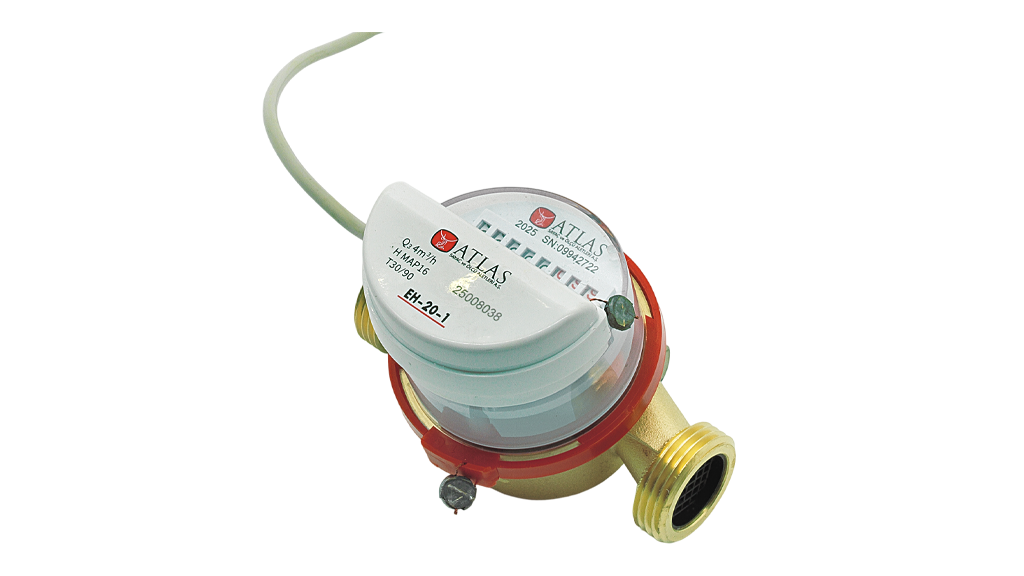
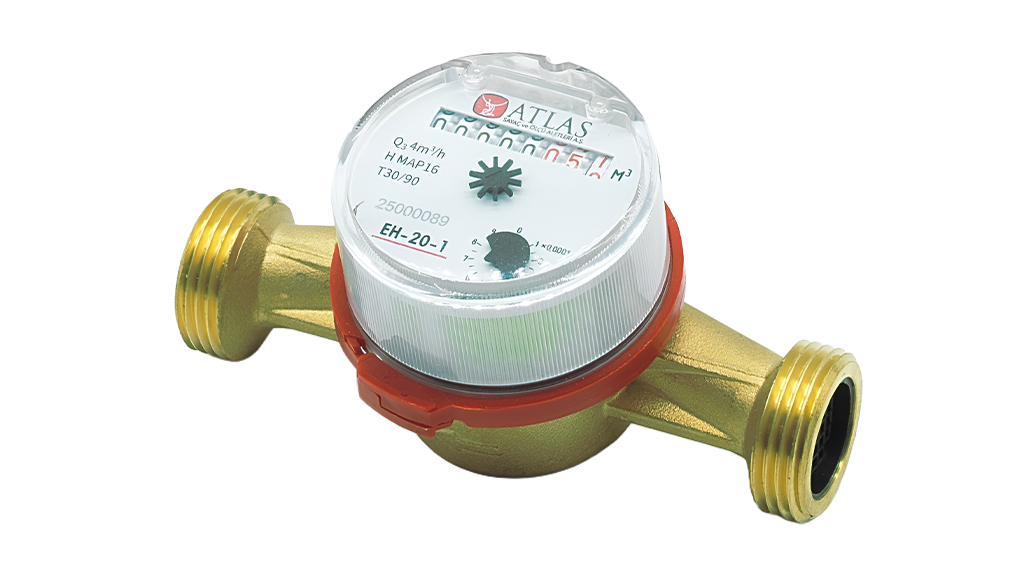
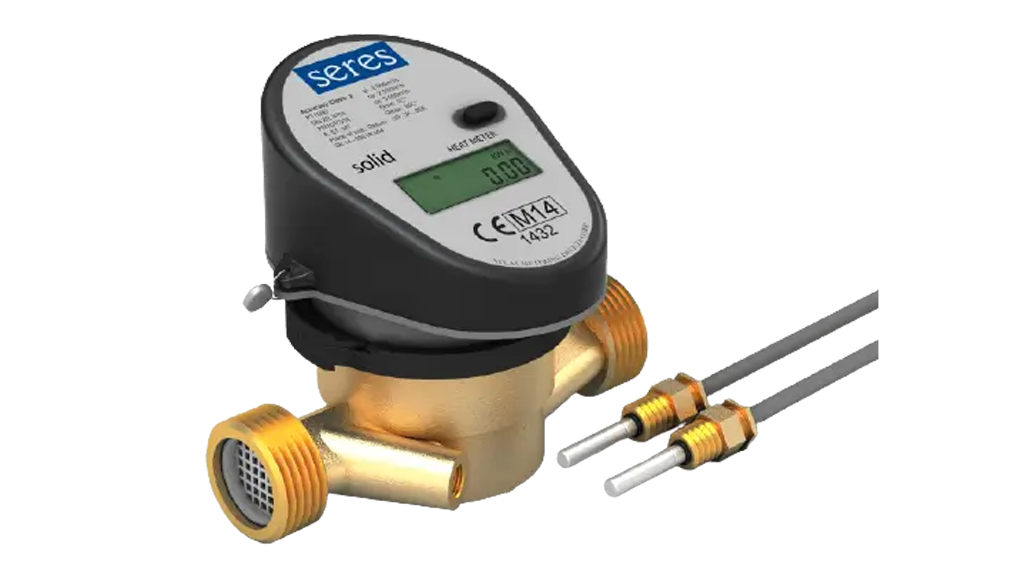
A mechanical heat meter measures the thermal energy transferred by water in a system. A mechanical flow sensor measures the water volume, while a pair of temperature sensors measures the supply and return temperatures. The calculator determines the transferred thermal energy from these measurements.
- These are measuring instruments that measure the speed of water using a propeller system with a precise mechanism, and which also feature a calculation unit and sensors.
- When purchasing a mechanical heat meter, the minimum flow rate and nominal flow rate for the application must be taken into account.
- The model with the DN (nominal size) best suited to the minimum and nominal flow rates should be selected.
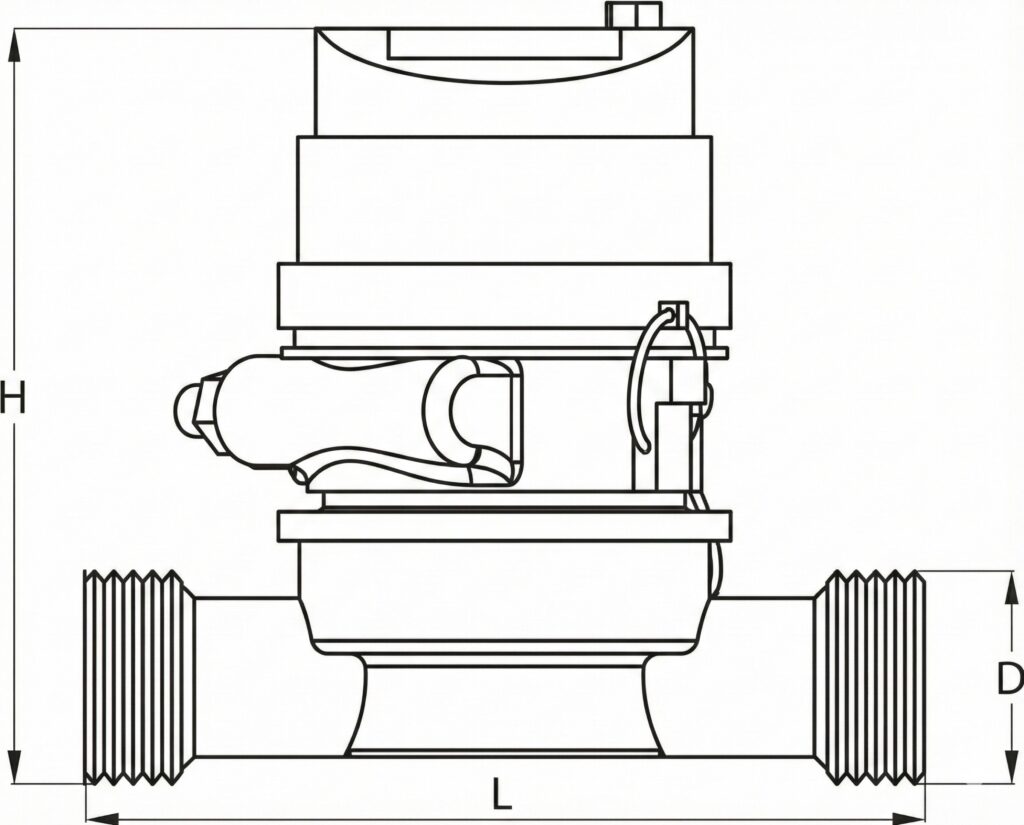
Mechanical heat meter models and installation dimensions
| Model Series | DN | Nominal Flow Rate (qp)[m³/h] | Min. Flow Rate (qi)[m³/h] | Length (L)[mm] | Height (H)[mm] | Width (W)[mm] |
|---|---|---|---|---|---|---|
| Seres Solid 15 | 15 | 0.60 / 1.50 | 0.012 / 0.03 | 110 | 107 | 84 |
| Seres Solid 20 | 20 | 2.50 | 0.05 | 130 | 107 | 84 |
| Seres Solid 25 | 25 | 3.50 | 0.07 | 180 | 107 | 84 |
What should you check when selecting a mechanical heat meter?
Consider flow rates and installation dimensions together when selecting a meter for an existing system or a new project. Matching the pipe size alone does not confirm that the measuring range is suitable.
- Minimum and nominal flow: Compare the system’s operating flow rates with the values in the product table.
- Connection and installation length: Check the DN, connection dimensions and body length.
- Temperature sensors: Plan installation of the supply and return temperature sensor pair according to the product manual.
- Reading infrastructure: Confirm that wired M-Bus, the optical interface and optional outputs meet your requirements.
When should you compare the ultrasonic alternative?
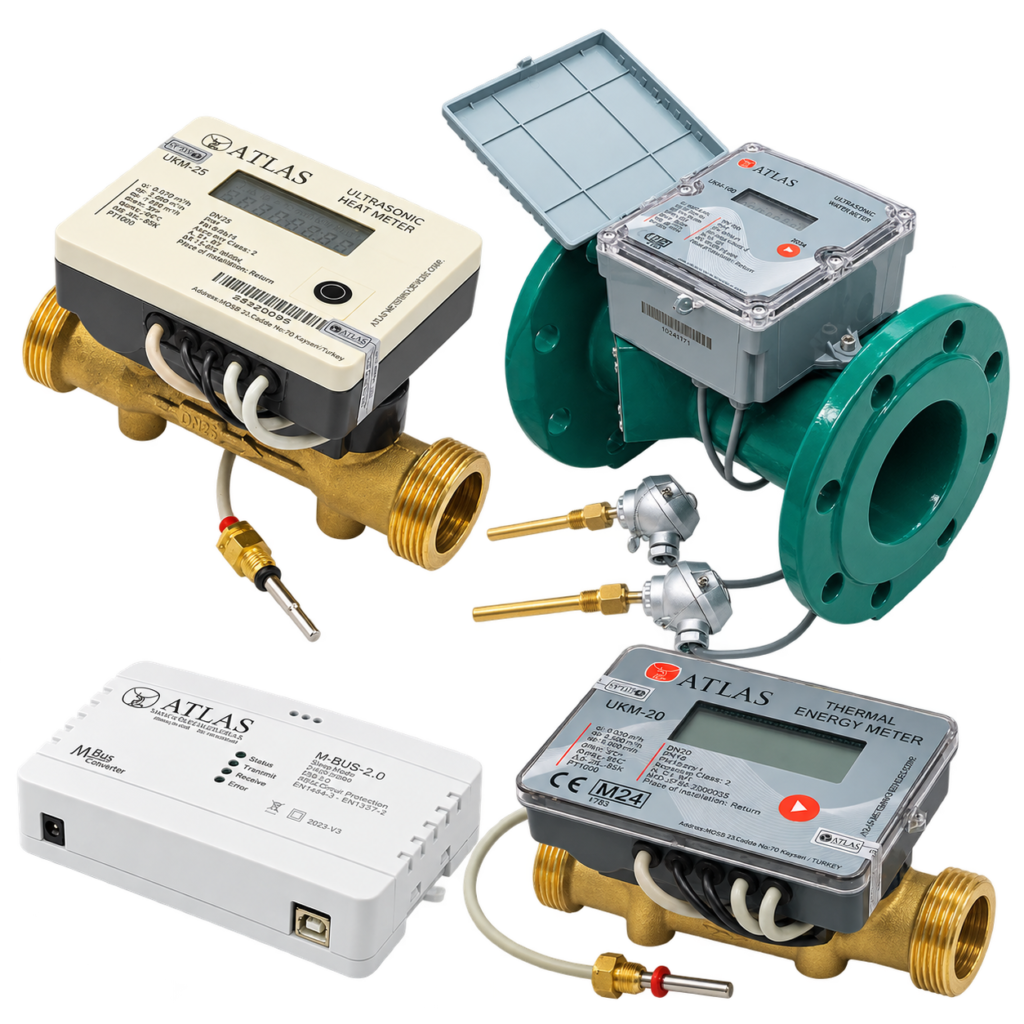
Explore ultrasonic heat meters when comparing flow measurement principles and installation requirements. Assess both product groups by flow range, installation length and communication options.
M-Bus meter reading
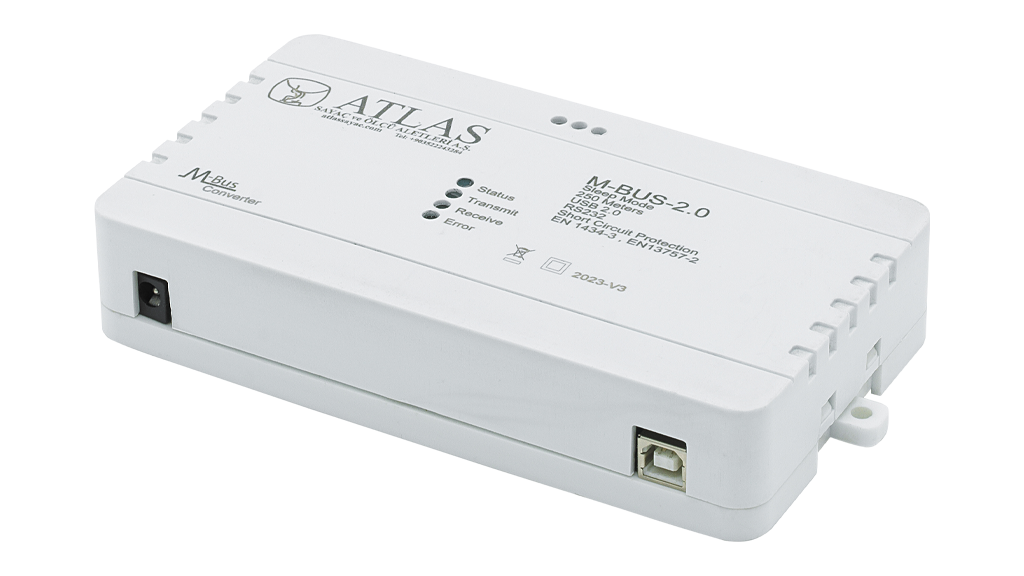
The product specifications include M-Bus and an optical interface. When planning remote reading, consider M-Bus converters alongside the number of meters and existing cabling. Confirm optional wireless and pulse hardware for the selected model.
Mechanical heat meter quotation
Provide the quantity, DN, nominal flow rate, installation length and preferred communication interface.