
NO POWER CABLE TO REMOTE SENSOR POINTS
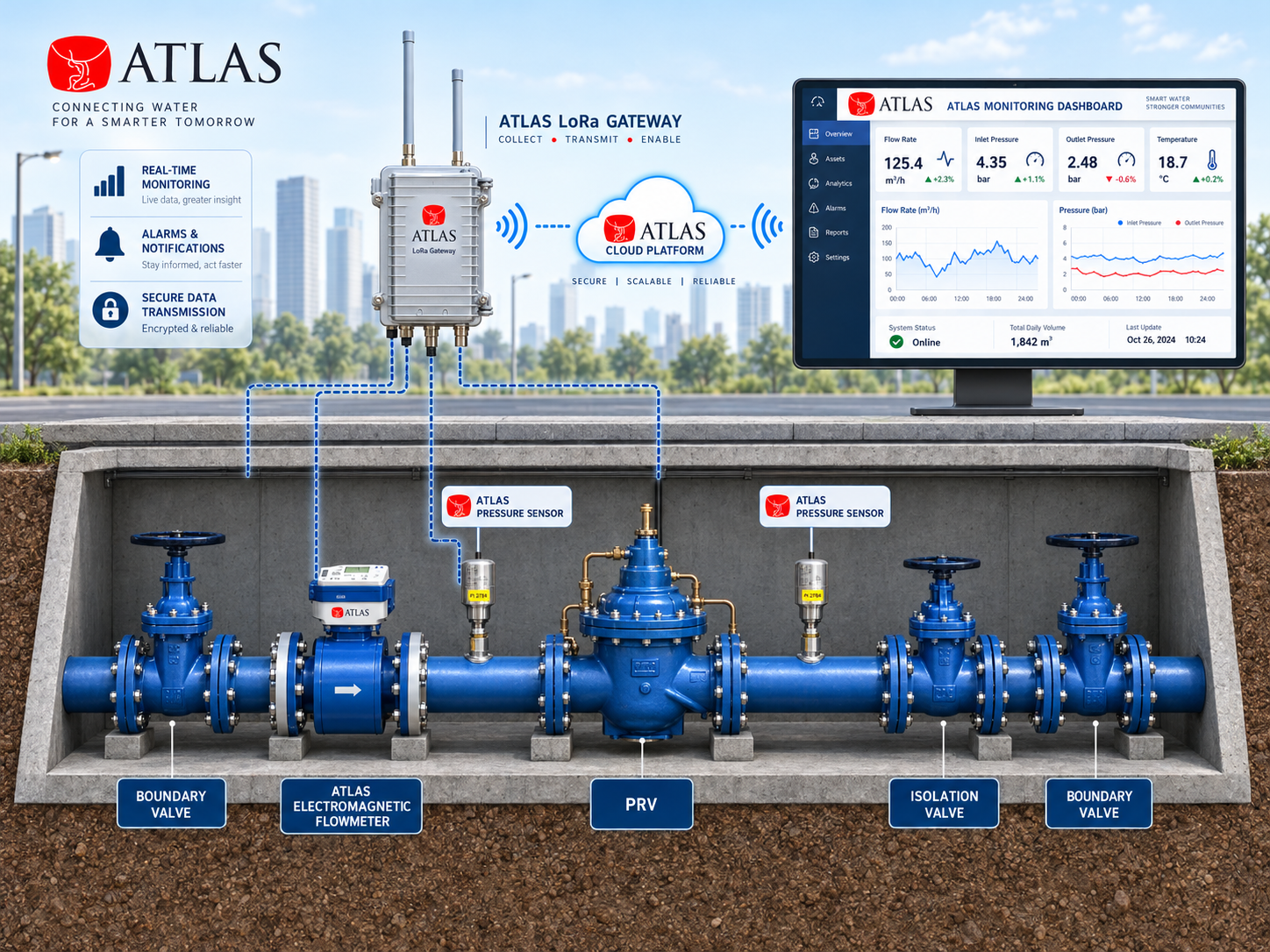
Battery-powered remote water network pressure monitoring
The field advantages of battery power
Measure without local electrical power wiring
Receive measurements wirelessly
Pressure charts, history and alarms
Remote visualization and integrations
Monitor valve chambers without grid power, minimize trenching and electrical wiring, expand the number of monitored locations and combine network pressure readings with ATLAS electromagnetic flowmeters and ultrasonic water meters.
Related engineering resources: ATLAS Smart Water Engineering Center covers DMA design, instrument selection, LoRaWAN and project scoping.
Remote pressure monitoring without running power cables to field sensors: battery-powered pressure transmitters, LoRaWAN gateway and centralized monitoring.
What is battery-powered network pressure monitoring?
The ATLAS battery-powered water network pressure monitoring solution is designed to observe pressure at selected points of drinking-water distribution networks. Battery-powered field sensors eliminate the need to install electrical power wiring at each sensing point.
Why battery-powered sensors?
Battery operation simplifies deployment in remote valve chambers, pressure-reducing valve inlet and outlet locations, and locations lacking grid electricity. Reduced cabling requirements can lower installation complexity and allow more flexible monitoring-point selection. Actual battery life depends on transmission intervals and site conditions.
How the system works
1. Battery-operated pressure sensors measure pressure in the pipeline. 2. Readings are transmitted wirelessly to a LoRaWAN gateway. 3. The gateway forwards measurements to the cloud or server platform. 4. Operators monitor trends, historical readings and configured threshold alarms.
Applications for water utilities
Typical use cases include DMA pressure profiling, comparing pressures upstream and downstream of pressure-reducing valves, investigating unusual pressure trends and monitoring industrial-zone or municipal distribution infrastructure. Pressure monitoring alone does not conclusively identify leaks.
Integration with ATLAS products
The solution architecture can combine an ATLAS LoRaWAN gateway, remote battery-powered pressure sensors, ATLAS electromagnetic flowmeters, ultrasonic water meters and compatible valve controls. Combining flow and pressure data improves operational visibility; remote valve actuation requires compatible equipment and authorization.
Specifications and project engineering
The ATLAS 2021 technical presentation cited approximately 10-minute sampling, a minimum five-year intended battery life, IP68 sensor protection and radio communication up to 10 km under suitable conditions. These historical values must be verified for current models and installation environments. Contact ATLAS for engineering and quotations.