LoRaWAN Battery-Powered Pressure Sensor
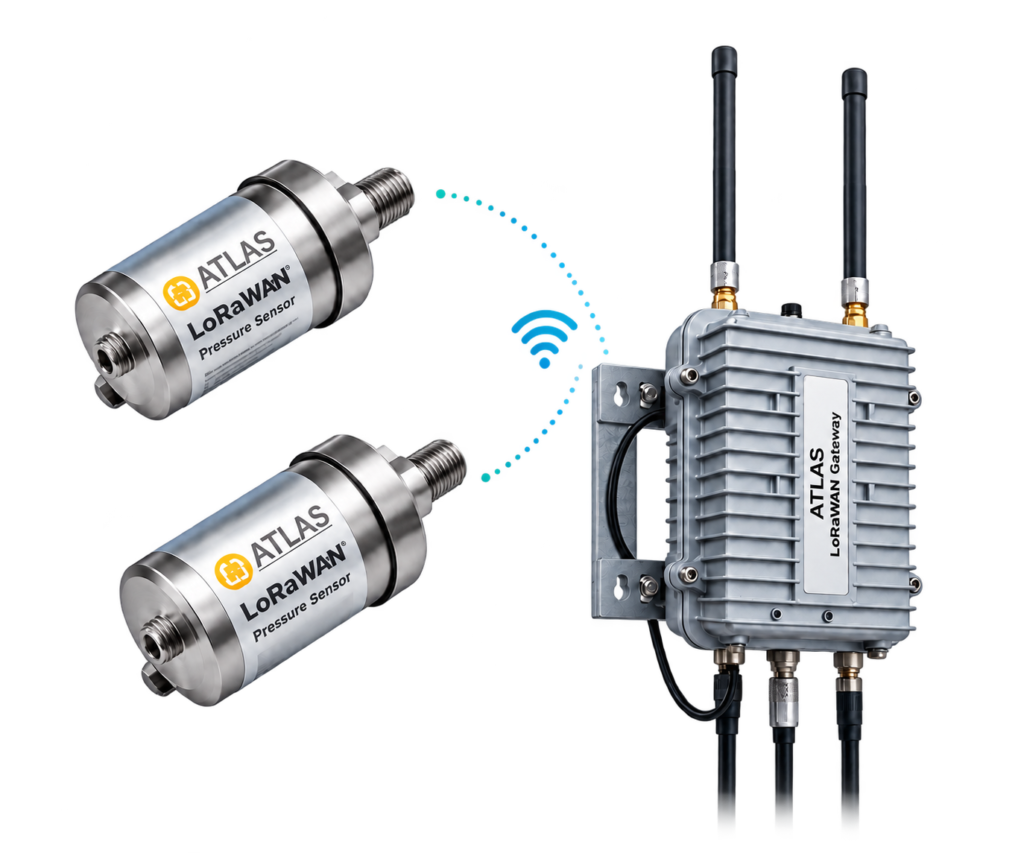
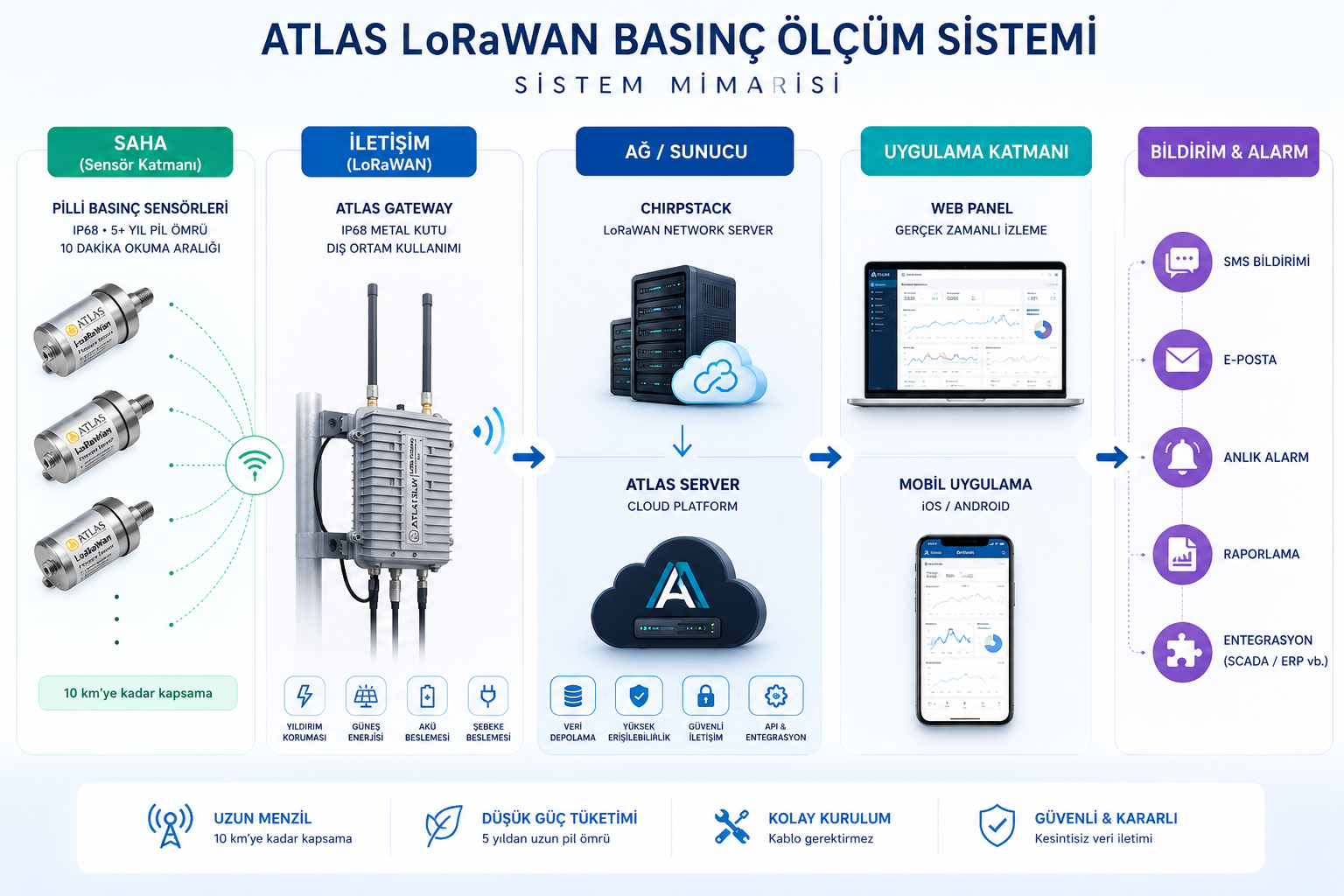
Battery-powered pressure sensors installed on the pipeline transmit field data through the Atlas Gateway to the AtlasServer.io Cloud platform. Pressure values can be monitored remotely using charts, maps, alarms, SMS and email notifications.
Atlas LoRaWAN Pressure Measurement System Architecture
Enterprise architecture showing field sensors, Atlas Gateway, ChirpStack, AtlasServer.io, the web panel, mobile application and alarm layers in a premium system diagram.
Real Field Device + AtlasServer.io Interfaces
The product page uses Atlas's own field gateway installation, pressure sensor list, daily data screen, chart screen and map screen instead of stock imagery.
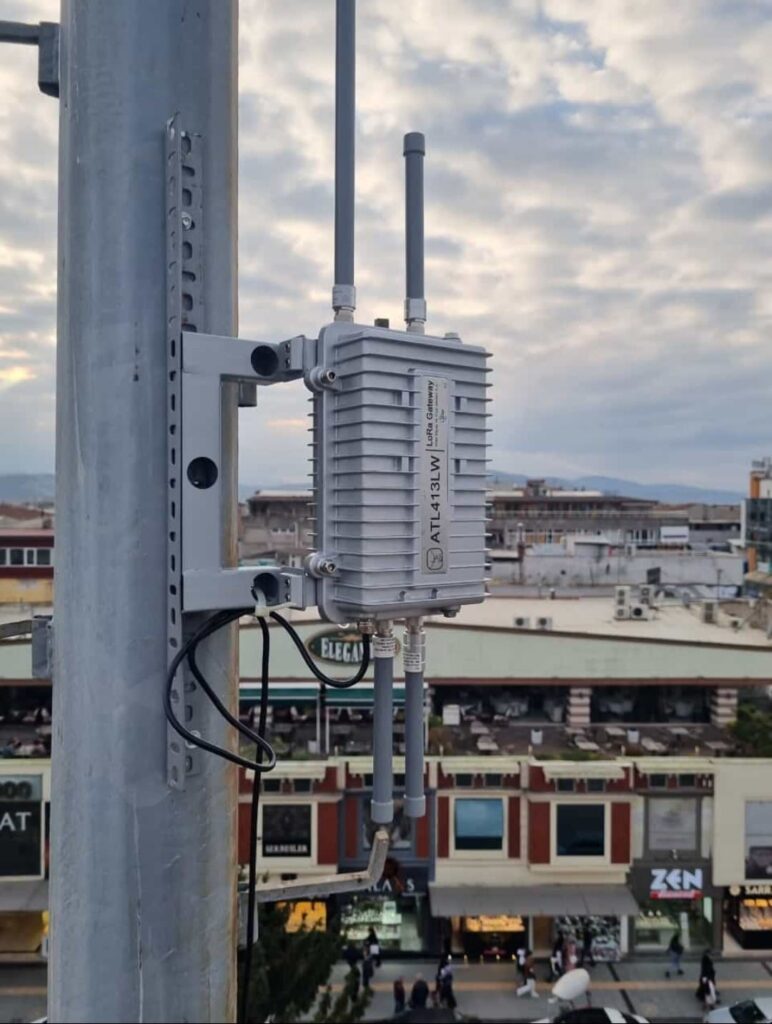
Atlas Gateway Field Installation
The gateway is mounted on a pole or at an elevated point in the field where the sensors are located and transfers data to the AtlasServer.io system.
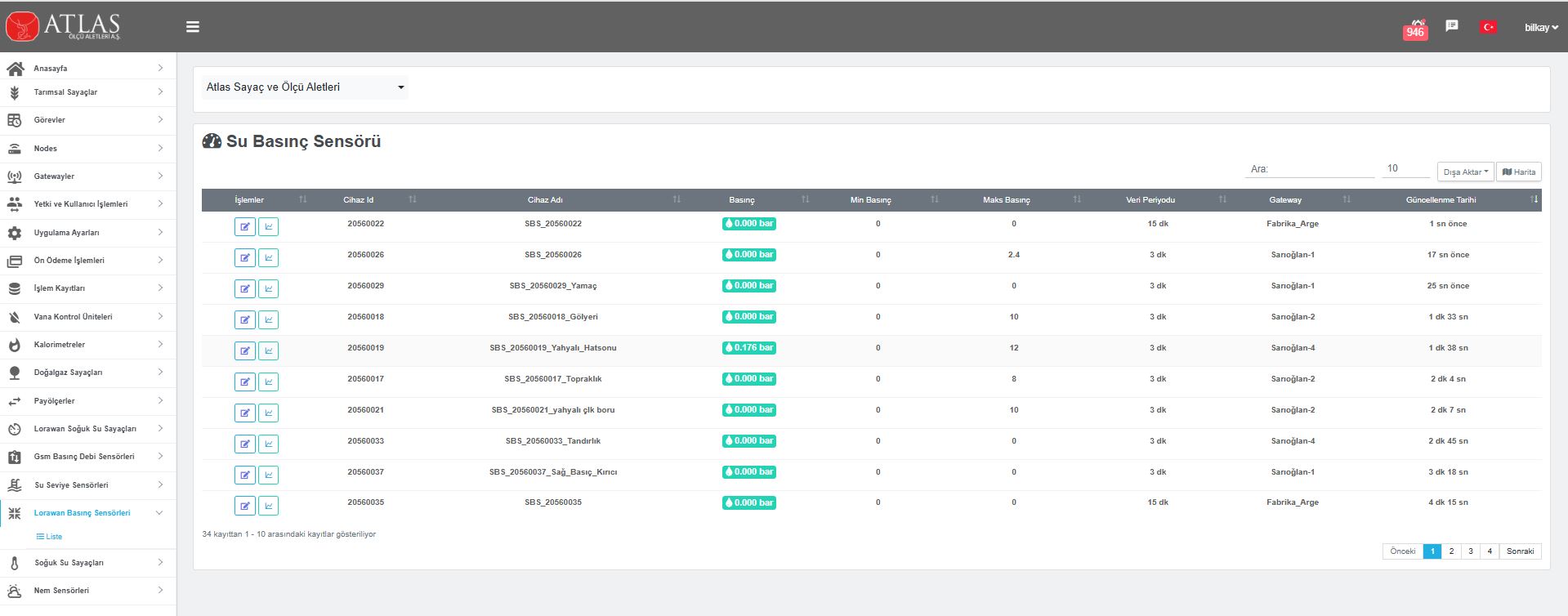
Pressure Sensor List Screen
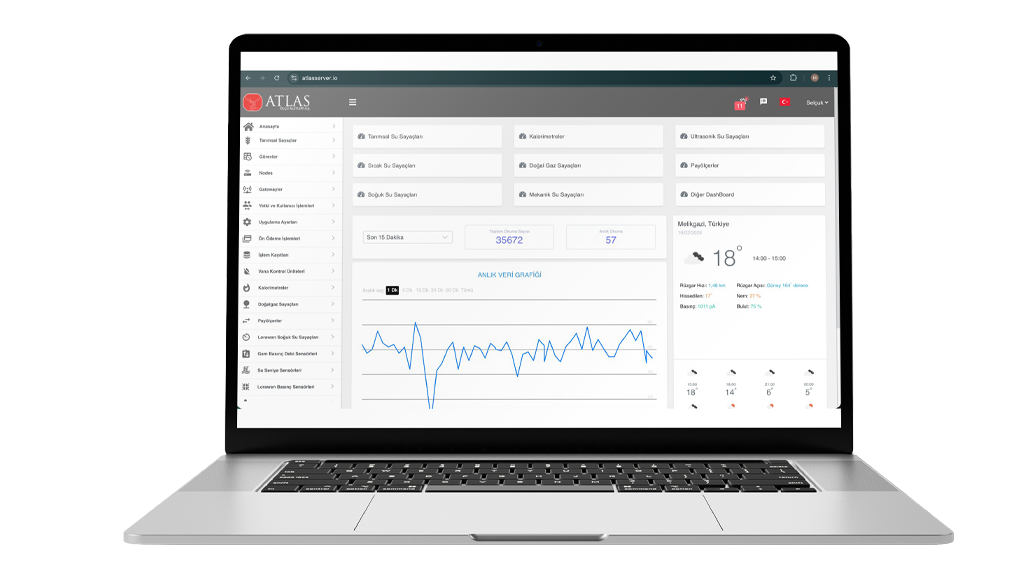
Device ID, device name, current pressure, minimum/maximum pressure, data interval, gateway and update time can be monitored.
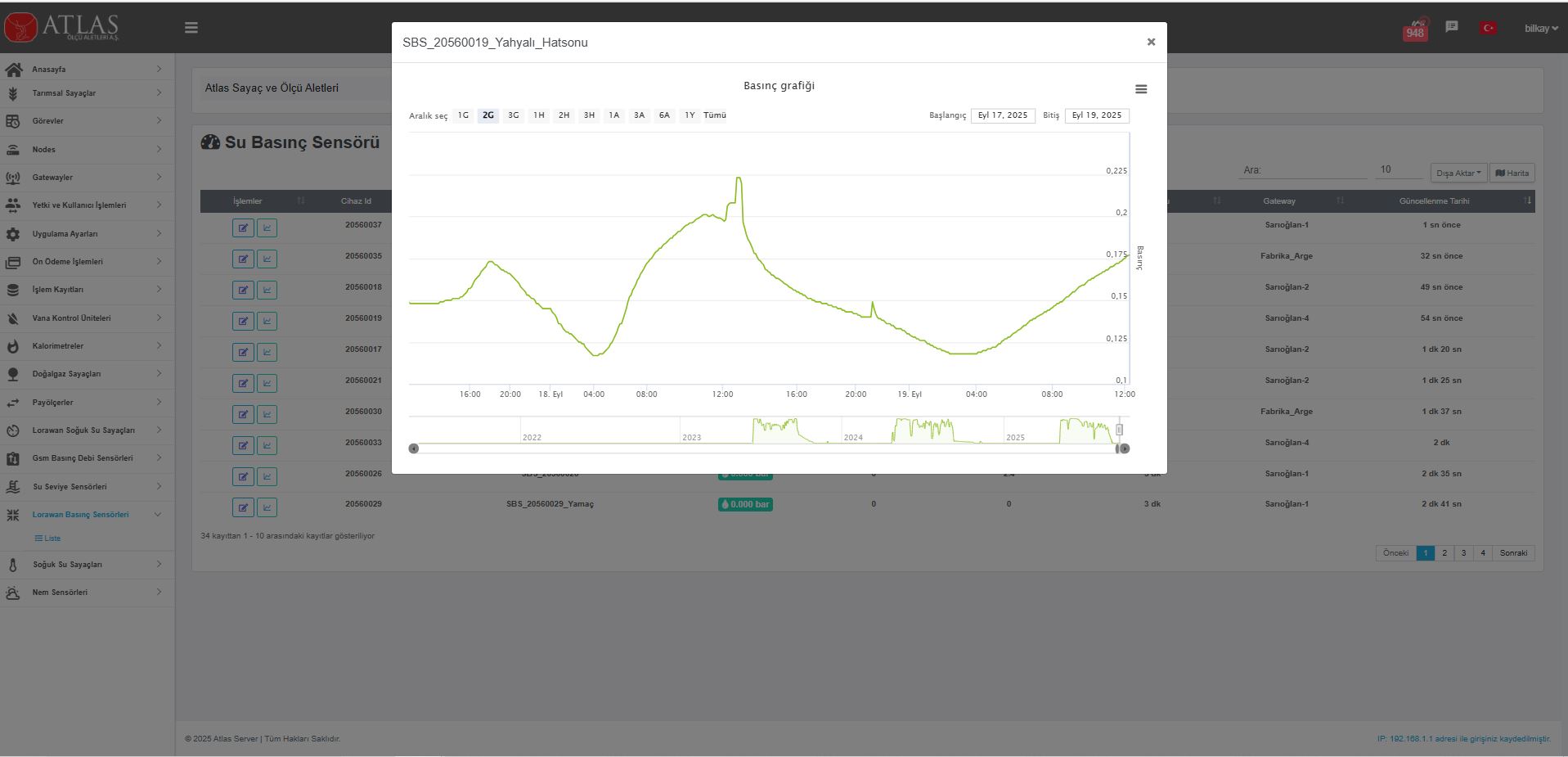
Live Charts and Historical Data
Pressure changes can be reviewed on charts over 1D, 2D, 3D and other time ranges.
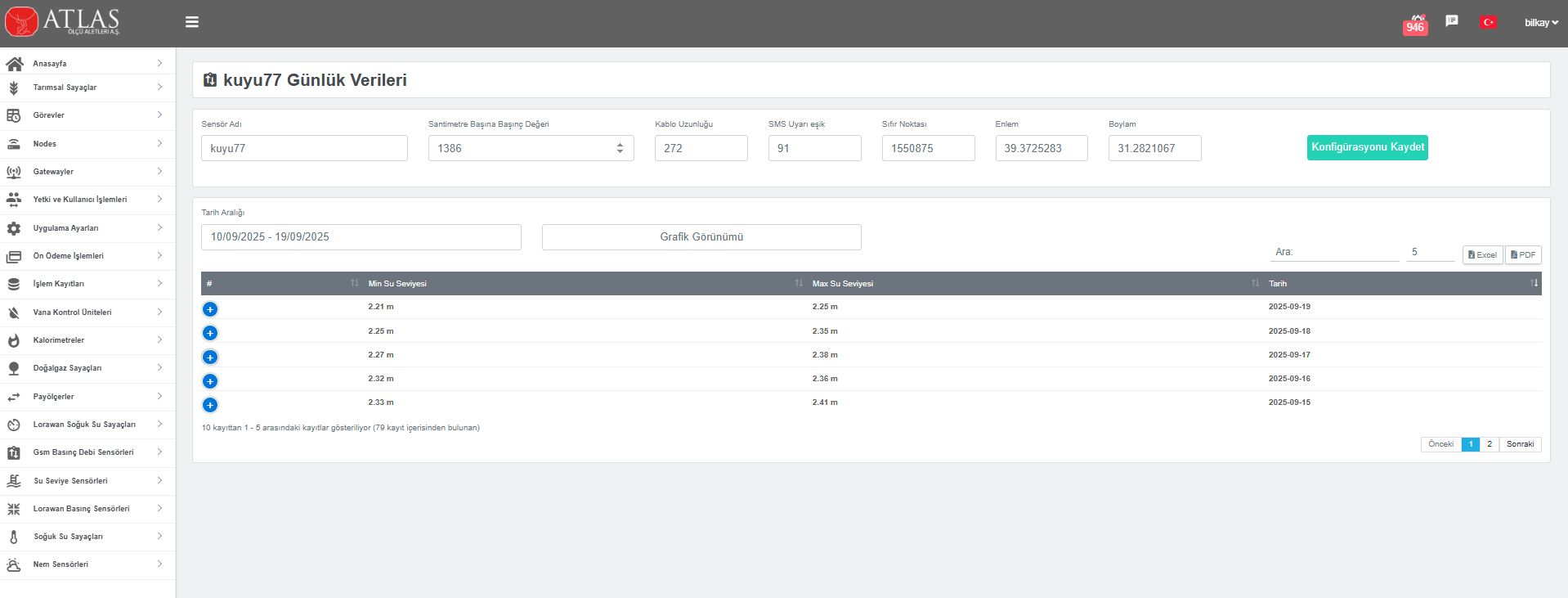
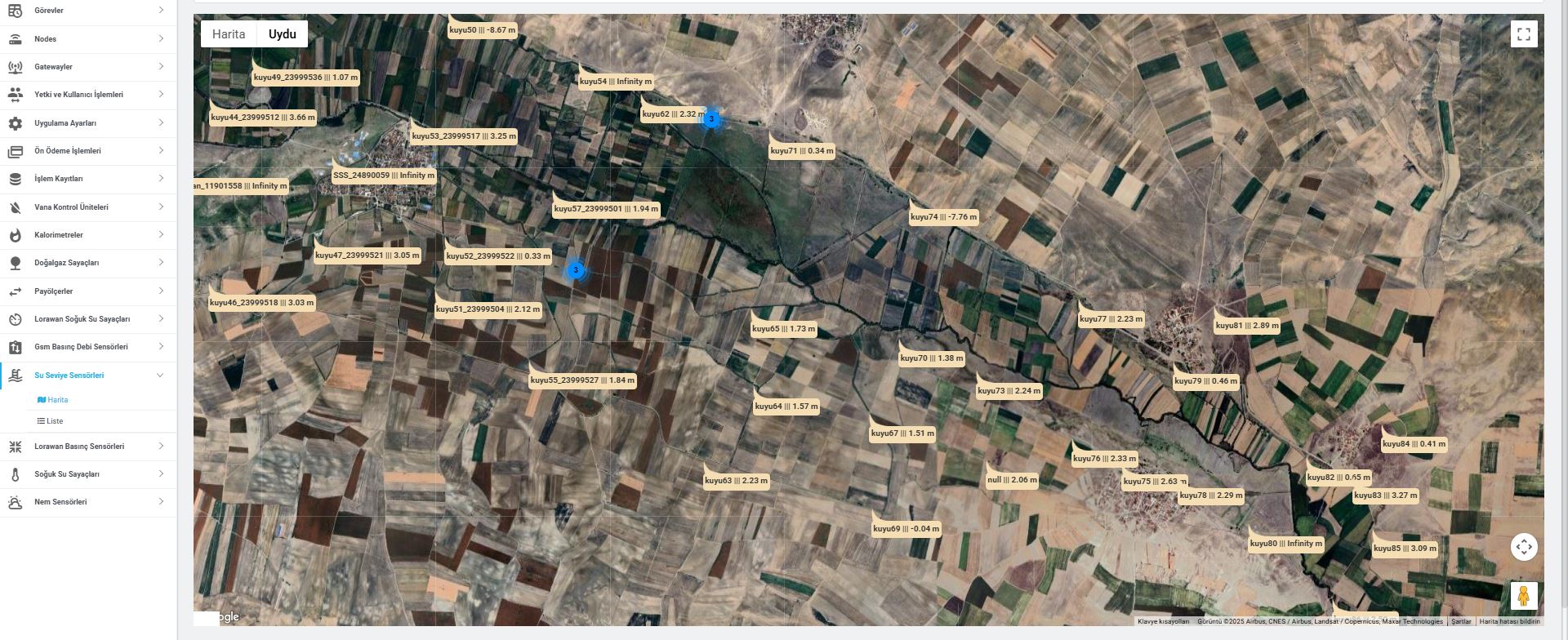
Centralised Monitoring with AtlasServer.io
Field data is collected online, converted into charts and, when required, transferred to water utility servers with service software support.
Challenges in Industrial Monitoring
Conventional wired pressure monitoring systems create high infrastructure costs and maintenance workloads, particularly in remote field, water network and agricultural irrigation applications. The Atlas LoRaWAN architecture makes this structure more scalable.
Conventional System Challenges
High Cabling Cost
Across large sites, the cost of power lines, cable routes, panels and installation increases.
Difficult Installation at Remote Points
Data collection becomes more difficult at wells, valve chambers, tanks and open-field locations.
Frequent Maintenance and Site Visits
Faults, broken cables, power outages and manual inspection processes increase the operational workload.
Lack of Real-Time Visibility
When pressure drops, leaks, bursts or pump problems are detected late, losses increase.
Atlas LoRaWAN Solution
Long-Range Wireless Communication
Data can be collected across a wide field using RF/LoRaWAN communication within a range of up to 10 km.
Minimum 5-Year Battery Life
The battery-powered design enables long-term operation at locations without power infrastructure.
Fast Installation and Scalability
Field installations can be commissioned quickly because fewer cables and panels are required.
Real-Time Alerts and Remote Monitoring
SMS or email notifications can be sent when defined alarm thresholds are exceeded.
Applications
Installed on pipelines, Atlas battery-powered pressure sensors enable remote monitoring in drinking-water networks, at pressure-reducing valve inlets/outlets, in agricultural irrigation lines and at industrial facilities.
Drinking-Water Networks
Sensors are installed at selected critical points so pressure data can be monitored online.
Pressure-Reducing Valve Monitoring
Inlet and outlet pressures are monitored to verify that pressure-reducing valves are operating correctly.
Agricultural Irrigation
Hydrant, filter, pump outlet and irrigation line pressures are monitored remotely.
Expandable System
Atlas flow meters, temperature and flow sensors, and battery-powered valve control devices can be added to the same network.
Technical System Summary
The system consists of battery-powered pressure sensors, Atlas Gateway and AtlasServer.io software. Data collected from the sensors is transferred through the gateway to the cloud platform and presented to the user as charts and alarms.
Build a Wireless Pressure Monitoring Infrastructure for Your Project
Wirelessly monitor drinking-water, agricultural irrigation, pressure-reducing valve and pump station points with Atlas Gateway, battery-powered pressure sensors and AtlasServer.io.
Contact Atlas Sayaç