Flow Measurement Range
Model Selection When Purchasing an Agricultural Water Meter
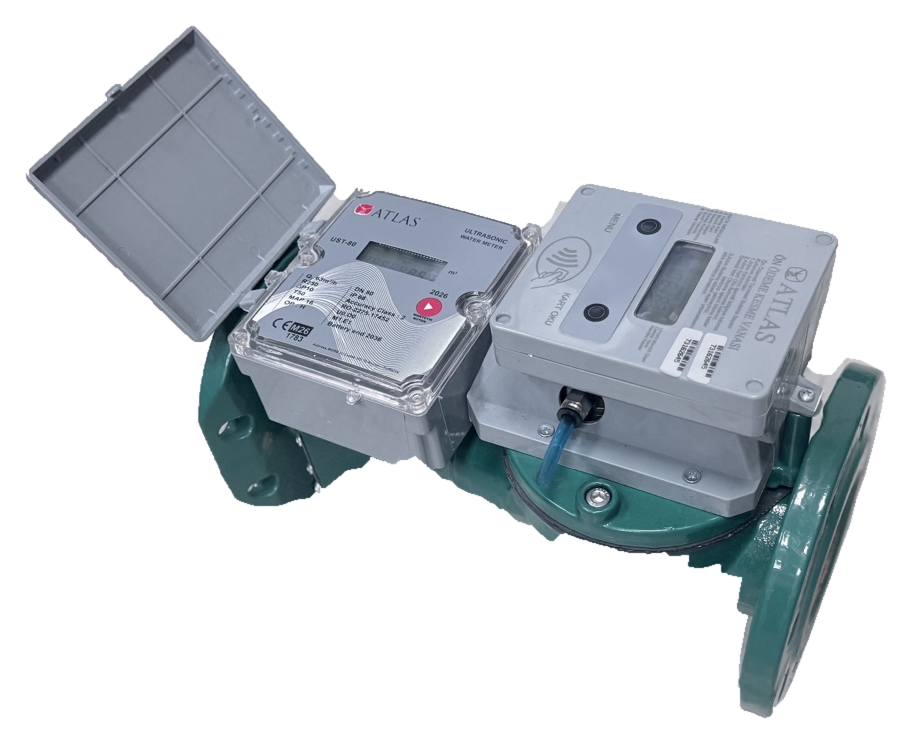
When purchasing an agricultural water meter, the flow rate of the intended application area must be considered.
The model with the most appropriate DN (nominal diameter) for the flow rate must be selected.
Flow Measurement Range
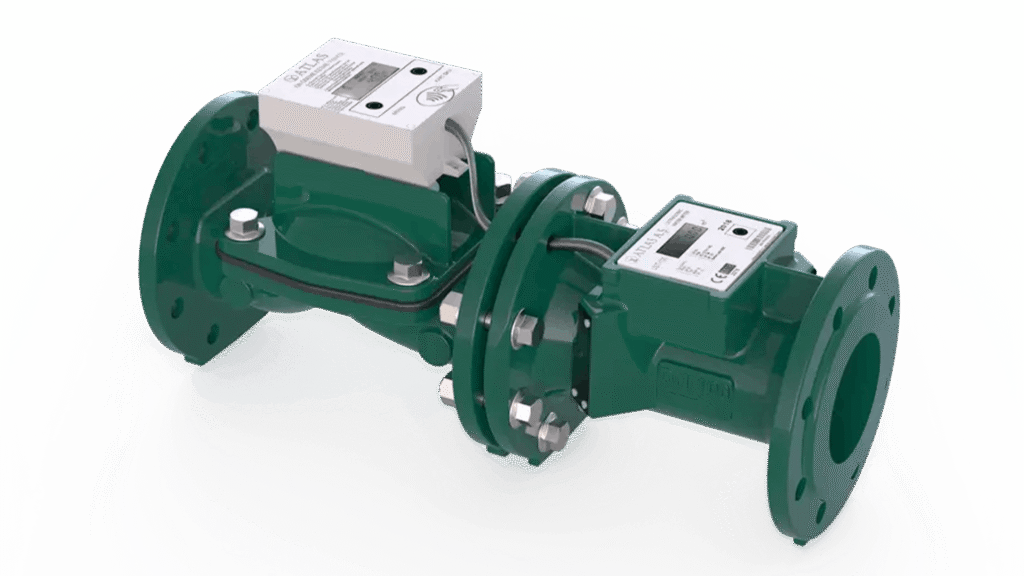
The table below shows the model chart correlating the DN (nominal diameter) with the flow measurement range.
Ultrasonic Flowmeter: Capable of measuring at low flow rates.
| Model | Minimum flow rate (q1) | Transitional flow rate (q2) | Permanent flow rate (q3) | Overload flow rate (q4) |
|---|---|---|---|---|
| UTM80 | 0.25 m³/h | 0.4 m³/h | 63 m³/h | 78.75 m³/h |
| UTM100 | 0.25 m³/h | 0.4 m³/h | 100 m³/h | 125 m³/h |
Advantages of Using Ultrasonic Type Meters
- Ultrasonic meters have no rotating or moving impellers or similar mechanisms. Given the water flow velocity inside the pipe, even the smallest particles act like sandpaper over time, damaging the plastic components in mechanical meters, eventually rendering them incapable of measuring or causing incorrect measurements.
- Ultrasonic meters do not count air passage. All types of mechanical meters with plastic impellers count air passage as if it were water.
- The installation of ultrasonic meters is very easy; they are not affected by inclined installation (No Moving Parts). Since mechanical meters contain a plastic impeller rotating on bearings, inclined installation damages the meter over time, and accurate measurement is impossible right from the moment it is installed.
- Because ultrasonic meters lack shafts, bearings, and impellers, they are not affected by sediment and debris.
- Ultrasonic meters create very low pressure loss. (This reduces the energy consumption caused by the pump.) Mechanical meters, on the other hand, create relatively higher pressure loss due to the plastic impellers rotated by the water flow.
- There is no risk of clogging in ultrasonic meters. They have the shape of a straight pipe without any indentations or protrusions. Mechanical meters, however, are affected by algae and organic waste; shafts stop rotating, and the front of the impellers becomes clogged. Over time, they block water passage.
- Ultrasonic meters do not register consumption due to air when there is no flow.
- Ultrasonic meters are not affected by temperature fluctuations.
- Ultrasonic meters have extremely high accuracy. They are produced with an R315 ratio. Mechanical irrigation meters are generally R25, and at most, they cannot exceed R160.
- Ultrasonic meters have a battery life of over 10 years. The lifespan of mechanical meters used in irrigation is at most 2 years.
- They store the monthly consumption data of the past 12 months in their memory.
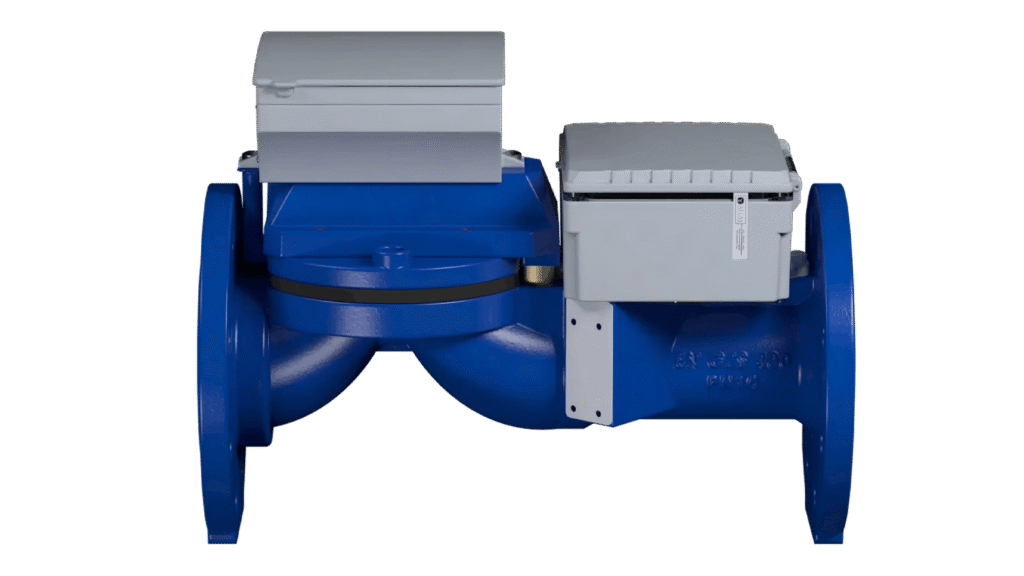
Package Contents
| Model | Length (L) | Height (H) | Width (W) |
|---|---|---|---|
| UTM80 | 367 mm | 310 mm | 200 mm |
| UTM100 | 463 mm | 322 mm | 220 mm |