
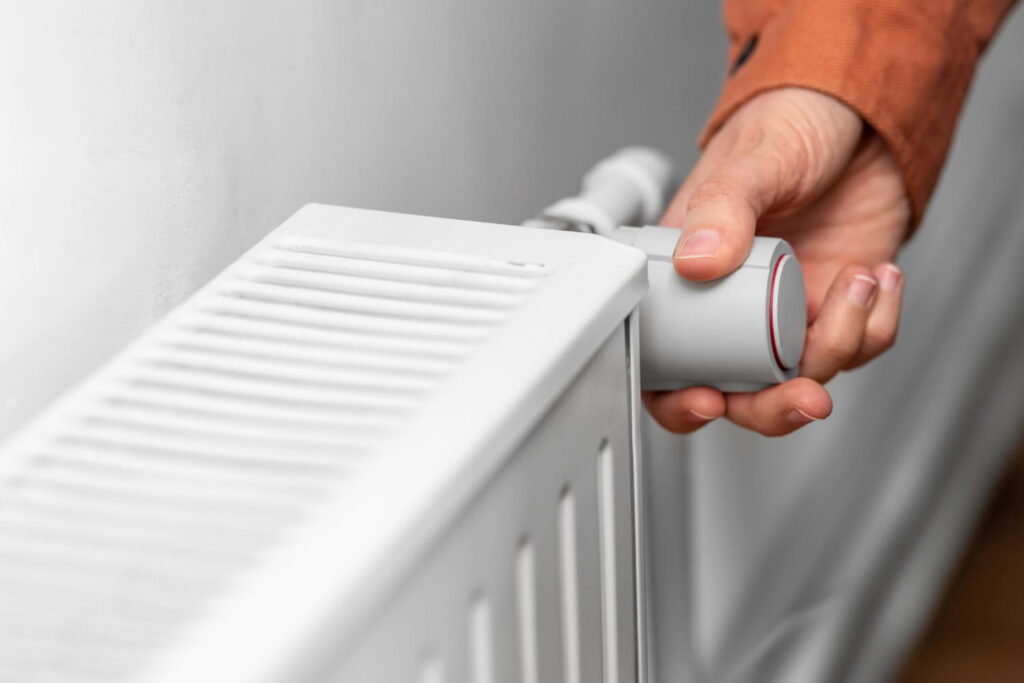
Objections to Natural Gas Allocation Miscalculations
Currently, while individual natural gas usage within an apartment is measured and billed using individual gas meters, in central heating systems, natural gas bills are allocated using calorimeters (heat meters) located at apartment entrances. There can be multiple reasons for an unexpectedly high natural gas bill. First and foremost, good insulation and the proper operation of your thermostatic radiator valves are essential. If you suspect calorimeter measurement errors and believe your meter is faulty, you can send your meter to the heat meter inspection company, www.estronarge.com, to have its accuracy and precision tested.
Examples of Calorimeter Heat Cost Allocation
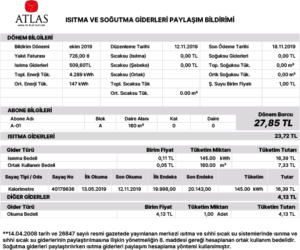
After your calorimeter devices are read automatically via the automation system, two different lists are generated. One is a summary list containing the cost allocation information for all apartments, and the second is a detailed list containing the specific usage data for each individual user. The detailed information includes all the comprehensive data that forms the basis of the allocation.
How is Natural Gas Allocation Calculated?
The heating expenses of central heating systems are allocated according to the following calculations.
Calculation when using heat meters (calorimeters):
- P1 = 0.70 x M x (S1/St)
- P2 = 0.30 x M x (A1/At)
- P = P1 + P2
- M: Total heating consumption amount of the building (TL)
- P: Total consumption amount of the independent unit (TL)
- P1: Consumption amount of the independent unit according to the heat meter (TL)
- P2: Common consumption amount of the independent unit (TL)
- S1: Value read on the heat meter in the independent unit
- St: Total value read from the heat meters in all independent units in the building
- A (m2): Usable indoor area of the independent unit
- At (m2): Total usable indoor area of all independent units in the building
How Can I Reduce My Natural Gas Bill?
An inflated natural gas bill can heavily impact your budget. To prevent this, certain precautions must be taken. Remember that you can significantly lower your bills by applying a few minor tactics:
- TEMPERATURE ADJUSTMENT: You can keep each room at a different temperature. By keeping the temperature low in unused rooms where you don’t spend much time, you can save energy. Using a thermostatic valve is all you need for this.
- THERMAL INSULATION: Placing thermal insulation boards behind the radiators is highly effective in conserving heat.
- POSITION OF CURTAINS: It is important to keep curtains open during the day to let the sunlight in, and closed in the evenings to protect against the cold. However, make sure the curtains do not cover the radiators. This allows the heat to spread better into the room.
- POSITION OF FURNITURE: Furniture should be positioned in a way that does not block the radiators.
- BUILDING INSULATION: Having proper building insulation can save you up to 40%.
- DOUBLE GLAZING: Using PVC frames and double-glazed windows and doors allows for up to 15% savings.
- RADIATOR CLEANING: Issues like rust, sludge, and calcification inside the radiators can cause heat loss. You can have your radiators cleaned to save fuel.
- DEGREE SETTING: A temperature of 22 degrees is recommended for living rooms, and 20 degrees for bedrooms. When the temperature drops by just 1 degree, a 7 percent saving in fuel consumption can be achieved. You can use room thermostats to effortlessly manage this 1-degree reduction.
Natural Gas Allocation with Heat Cost Allocators
Approximately 30% of the overall fuel bill is shared proportionally among users (for common areas and system losses), while the remaining 70% is allocated based on calculations derived from the individual readings of the heat cost allocators.