
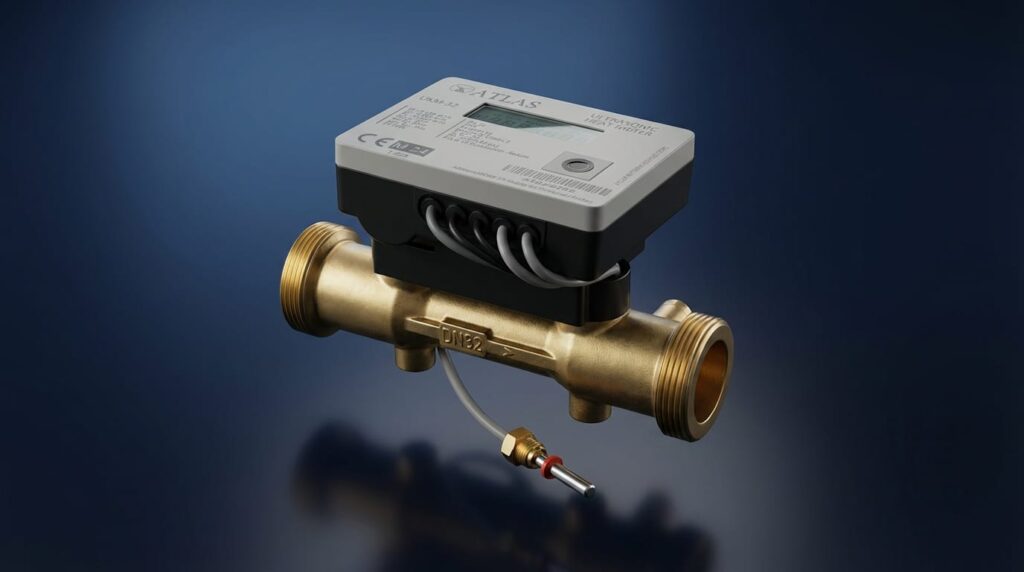
1. What is a Calorimeter and How Does it Work?
The calorimeter, also known as a “heat meter,” is a device used to measure the heat energy consumed in buildings heated by a central system. The basic operating principle of the calorimeter is to calculate the temperature difference between the hot water entering and leaving the apartment and multiply this value by the total volume of water passing through the line. This resulting data determines the heat energy consumed by the apartment in Joules or kWh.
Modern calorimeter devices store the amount of heat energy consumed each month in their memory, and users can view the consumption values of the past 12 months from the menu on the device. Additionally, these devices feature a communication protocol called “M-Bus”. Thanks to this technology, all meters are connected to each other over a single cable without polarity difference, enabling data communication. Thus, it becomes possible to read the meters remotely, quickly, and flawlessly, and allocate the costs through billing software.
2. Concepts of Heat and Temperature
To understand what a calorimeter does, it is necessary to know the difference between heat and temperature.
- Temperature: It is the measure of the hotness or coldness of an object (the average molecular kinetic energy).
- Heat: It is the energy transferred from a system at a certain temperature to a system at a lower temperature. The heat meter (calorimeter) is the exact device that measures this transferred energy. Its use has become widespread with the Energy Efficiency Law in Buildings, and it enables the determination of consumption values that form the basis for payment.
3. Calorimeter Types and Features
Calorimeters are fundamentally divided into two based on their measurement technologies:
- Mechanical Calorimeter: These are devices that measure the velocity of water with a sensitive impeller (turbine) system. The calculation unit and sensors are similar to other models.
- Ultrasonic Calorimeter: It does not contain a moving mechanism. It measures the velocity of the water passing through it using ultrasonic sound waves. Since it contains no mechanical parts, its biggest advantage is that it is unaffected by dirt or sediment in the installation water.
Exemplary Standards (Atlas Mechanical Calorimeter): A high-quality calorimeter must have an accuracy above metrological measurement standards and must be manufactured in accordance with the EN1434 standard. It should offer up to 10 years of battery life with low energy consumption and provide reliable results without being affected by magnetic fields.
4. Device Selection and Installation Criteria
For accurate measurement, a calorimeter with a flow rate and diameter suitable for the heating system must be selected. Devices chosen too large or too small can cause serious errors in measurement results.
- Automation Infrastructure: If there is existing wiring in the building, wired M-Bus should be preferred; if not, Wireless M-Bus enabled devices should be chosen.
- Standards: The device to be selected must comply with EN1434 standards and bear the CE mark within the scope of MID (Measuring Instruments Directive).
- Installation: Isolation valves must be placed before and after the calorimeter, and a filter must absolutely be installed in the water inlet direction. If a filter is not used, installation debris can clog the device, or it may become difficult to remove the device when calibration is required.
5. Legal Legislation and Energy Cost Allocation
Pursuant to the Energy Efficiency Law No. 5627, heat cost allocation systems are mandatory in buildings with central heating systems. This system is based on the “pay as you consume” principle. While apartments paid a fixed fee whether they were heated or not in the old systems, a fair allocation is ensured in this system.
Advantages of the System:
- Since the boiler automation operates based on heat demand, fuel savings are achieved throughout the entire building.
- Installation and usage costs are lower compared to individual combi boiler systems.
- 15°C Rule: According to the regulation, the indoor temperature of an apartment cannot be lowered below 15°C. This rule is intended to prevent unfair heat transfer between apartments (stealing heat from neighbors) and structural deterioration of the building. Thermostatic valves do not allow the temperature to drop below this level.
6. Calculation Method (70/30 Rule)
According to the regulation, bill allocation is performed using the following formula:
- 70% (Individual Consumption): Allocated based on the actual consumption values read from the calorimeter devices.
- 30% (Common Expense): 30% of the building’s total heating cost is allocated based on the usable floor area (m²) of the apartments. This share covers the heating of common areas such as stairs and entrances, as well as system heat losses.
Hot Water Allocation: Central hot water expenses are also calculated based on the consumption volume (m³) measured by the meters. Depending on the type of the system, the fuel unit price and water heating cost are formulated and billed to the apartments. In geothermal-sourced systems, the difference between the main meter and the apartment meters is allocated as a common expense based on the m² ratio.
7. Tips for Savings and Efficient Usage
To achieve up to 30% savings with the calorimeter system, the following points should be considered:
- Thermostatic Valve: Check the proper functioning of the valves. If the radiator cools down when the room temperature reaches the set value (e.g., 20°C), it means the valve is working correctly.
- Furniture Placement: Do not block heaters (radiators) with sofas, cabinets, or long curtains. This traps the heat against the window or wall instead of radiating it into the room.
- Ventilation: Instead of leaving windows slightly open for a long time, perform short-term (fully open) ventilation. This clears the indoor air without letting the walls cool down.
- Leaving the House: If you are going out for more than 4 hours, lower the temperature, but do not turn the system off completely (cooling walls make it harder to reheat).
- Maintenance: Have the calorimeter filters and plumbing dirt separators cleaned periodically.
- Insulation: If there is heat loss in your apartment (window seals, etc.), take the necessary precautions.