
1. What is a Heat Cost Allocator and Reasons for Preference
A heat cost allocator is an electronic device installed on each radiator in buildings with central heating systems, which determines the amount of heat consumed by that radiator during a specific period.
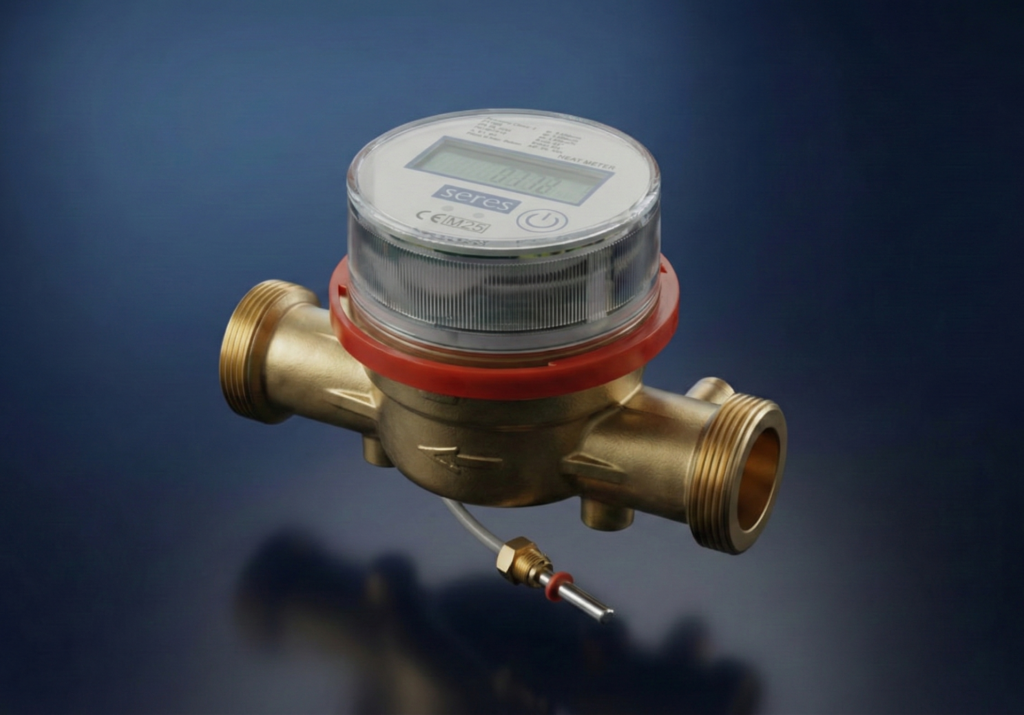
- System Selection: For manifold systems, using a “Calorimeter (Heat Meter)” is more advantageous. For buildings with vertical pipe (riser) systems, using a “Heat Cost Allocator” is more appropriate in terms of efficiency and cost.
- Location Effect: Heating costs vary depending on the apartment’s location. While south-facing and middle-floor apartments spend the winter with lower costs, north-facing, ground-floor, and top-floor (under-roof) apartments may face higher expenses.
2. Heat Allocation Principles and Calculation Method
According to regulations, total heating expenses are allocated under two main categories:
- 70% Consumption Cost: Calculated based on the independently measured heat consumption of the individual units (apartments).
- 30% Common Expense: Allocated based on the usable floor area (m²) of the apartments, taking into account common areas, system heat losses, and minimum operating expenses.
3. Operating Principle of the Device and Reading Process
- Data Transmission: Thanks to the built-in radio transmitter, each heat cost allocator wirelessly sends the collected data.
- Reading: Data is collected via a receiver (handheld terminal). Readings can be done remotely without the need to enter the apartment.
- Billing: The collected data is converted into bill allocations by authorized personnel according to the formulas set out in the regulations.
4. Security, Error, and Fraud Detection
The devices provide highly precise measurements and are protected against external tampering.
- Tampering Detection: Irregularities such as the removal, excessive heating, or freezing of the products can be tracked and recorded by the system.
- Incorrect Measurement: It is not possible for the devices to be manipulated or misled by the user. If an error is suspected, the company’s technical service should be contacted.
- Standards: The devices are VDE (German Standards) approved, and their error rates are extremely low.
5. Legal Obligation and Installation Process
- Legal Legislation: Pursuant to the Energy Efficiency Law No. 5627, the use of heat cost allocators and thermostatic radiator valves has been mandatory in buildings with central heating systems since 2012.
- Decision Making: In buildings larger than 2000 m², unless there is a unanimous vote to the contrary by the board of directors, the installation of this system can be decided by a majority vote.
- Installation: Following the contract, the installation is completed on a designated day, taking approximately 15-20 minutes per radiator. It is strictly mandatory to install devices on all radiators, including those in building entrances, stairwells, and the janitor’s apartment.
6. Benefits and Advantages Provided by the System
- Economic Savings: Provides an average of 30% savings in energy consumption.
- Efficiency: Reduces wear and tear on the system by discouraging unnecessary energy consumption (such as turning down the valve instead of opening a window).
- Fair Allocation: Prevents unfairness by factoring in the number and type of radiators, as well as the apartment’s location (north-facing, roof, etc.) during calculations.
- Management Convenience: Calculations are presented to the building manager as computer printouts by our company, significantly reducing the manager’s workload.
- National Economy: Thanks to heat cost allocators, central heating systems become more advantageous than individual combi boilers, leading to broader energy savings.
7. Maintenance, Lifespan, and Warranty Conditions
- Lifespan: The devices are long-lasting. Only battery replacements are performed at specific intervals.
- Inspection: Unlike heat meters, there is no mandatory calibration or periodic inspection process for heat cost allocators.
- Warranty: Guaranteed for 2 years from the initial installation. The warranty is void in cases of user-caused breakage or damage, and the device is replaced for a fee.
- Fault Condition: If a damaged device is detected, that specific radiator is billed based on the “highest value” during the reading period. Faulty devices (non-user error) are replaced free of charge under warranty.
8. Application Types
- Digital/Wireless: Today, digital devices with manual reading or wireless (radio) systems that can collect data without entering the apartment are primarily used.
- Hot Water Measurement: If requested, special water cost allocator systems that also calculate central hot water consumption can be integrated into the plumbing.